It's easy to feel hopeless when the news is filled with wars, crises and rising inequality. But in the midst of it all positive change is also taking place. In 2025, the MyRight, together with partners around the world, strengthened disability rights and increased the participation of persons with disabilities. Here are ten good news stories from the past year - ten concrete examples of what MyRights work has made possible. This is just a sample of what has been achieved this year, and a reminder of the difference we can make when disability rights are recognised.
1. Tanzania: More people should be able to vote on equal terms
The Tanzania Federation or Disabled People's Organisations (SHIVYAWATA) is Tanzania's national umbrella organisation for disability rights issues. In 2025, the organisation has carried out advocacy work to get people with disabilities to be more included in the electoral process. The work has resulted in The Tanzania Electoral Commission (INEC) is committed to ensuring that polling centres are inclusive of persons with disabilities for the next elections. This includes measures for physical accessibility in polling stations, accessible information for voters, and overall work to ensure that persons with disabilities are included throughout the electoral process. Historically, people with disabilities have often been excluded from these processes and the advocacy work done by SHIVYAWATA is therefore an important part of ensuring that these people also have their rights realised and have the opportunity to become an active part of democracy.
2. Nicaragua: Deafblind rights get a bigger place in politics
MyRights partner organisation Asociación the Sordociegos de Nicaragua (ASCN) works for the rights of deafblind people. As active members of the Citizens' Council “Citizen Power Cabinet for Persons with Disabilities” ASCN has been able to influence national policy in Nicaragua. This is the only recognised forumand where organisations of people with disabilities can present their needs and requirements directly to decision-makers. Through its participation, ASCN has been able to raise the profile of deafblindness as a unique disability requiring specialised support, which is crucial to ensure that the group is not forgotten in future programmes and policies. The work has raised awareness among decision-makers and resulted in concrete measures to improve accessibility and services. At the same time, cooperation with different stakeholders has been strengthened, enabling work on inclusion and equal rights for all to continue.
3. Bolivia: A stronger disability rights movement influences the election debate
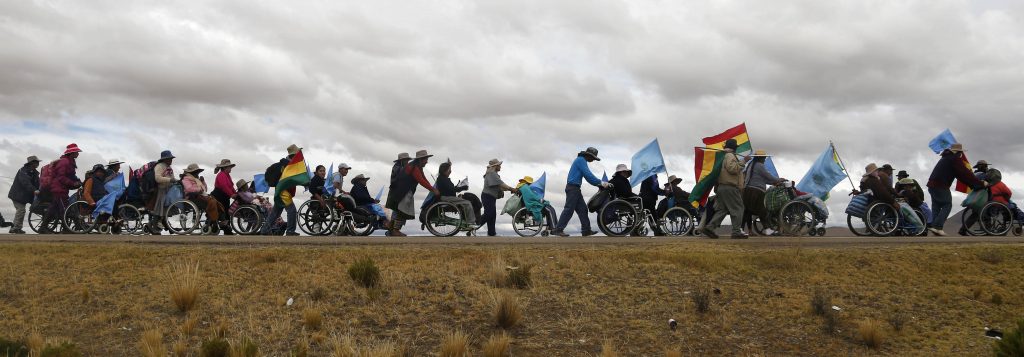
Working in Bolivia our partner organisation Federación Cochabambina de Persona arsehole Disability (FECOPDIS) on disability issues at national level. Over the past year, they have adopted a leading and participatory role by coordinating the work on national guidelines for persons with disabilities together with eight regional and several national federation organisations. The functional rights movement in Bolivia has long found it difficult to unite and co-operate, but this project has shown that it is possible. Through open and coordinated work, FECOPDIS has been able to take responsibility for bringing the federation together and driving the process forward. The initiative resulted in an inclusive political forum where presidential candidates were invited to present concrete proposals on how to actively work on disability rights issues, strengthening the voice of the movement in the electoral campaign.
4. Bosnia and Herzegovina: New law strengthens the right to support and assistance
Bosnia and Herzegovina has adopted a new law in 2025, “the law on the unified principles and framework for material support to persons with disabilities”, which will serve as a sustainable system for financing support measures, annual indexation of benefit levels and entitlement to personal assistance. Among other things, this will mean that people with disabilities will be entitled to subsidies, for example for personal assistance. In March, a draft law on vocational rehabilitation and employment was also adopted, which will increase employment opportunities for people with disabilities. These advances strengthen disability rights at the state level and are thanks to the Association for Support or Persons with Intellectual Disabilities in Sarajevo Canton (OAZA), together with their 8 other partner organisations in the country.
5. Nicaragua: Stronger local organisations create broader social change
MyRight's partner organisation in Nicaragua Federación Nicaraguan the Associations the Personas arsehole Disability (FECONORI) with national disability rights issues. In 2025, they have strengthened their work by updating the operational plans of 14 local associations and made progress in several areas. In the labour sector, FECONORI has deepened cooperation with the Ministry of Labour, organised CV workshops, signed agreements with companies for job training and raised the need for more inclusive workplaces. In the health sector, they have trained staff in standardised care and worked on facilitating the issuance of ID cards for persons with disabilities. In the education sector, together with the Ministry of Education, they have strengthened security in 26 specialised schools by risk planning and protection protocols. Work on gender equality has included training on gender, sexuality and rights and updating the gender policies of three organisations. FECONORI has also contributed to the National Citizens' Council's work on accessibility and worked with SINAPRED to ensure the inclusion of persons with disabilities in disaster preparedness and national exercises.
6. Ethiopia: More people learn about their rights
Several of the MyRights partner organisations around the world labourer for to increase awarenessand to disabilitiess impact and that starcha availabilityand for people with disabilities. In Ethiopiaand held Ethiopian National Association or the Blind (ENAB) organised a two-day seminar for people with visual impairments. A total of 40 people attended, 23 men and 17 women. The seminar aimed to raise awareness of the UN Convention on the Rights of Persons with Disabilities (CRPD). Jlegal experts provided the participants knowledge of Convention principles, different forms of advocacy - such as self-advocacy, policy and community work - and on rights linked to employment. Participants came from a wide range of organisations and societal functions, many of themm were teachers, women leaders, young people and volunteers from various cultural committees. This project is considered successful because 40 people in Ethiopia have been empowered with knowledge about their disability rights and how they can influence society and their own lives.
7. Sri Lanka: Young deaf people get better language to participate
In Sri Lanka, an intervention was carried out by the Deaf Youth Association (DYA) for young people with hearing loss to empower them through an updated sign language vocabulary. The intervention was conducted as a workshop together with experts from Sign Language Dictionaries developed by the Sri Lanka Central Federation of the Deaf (SLCFD), and aimed to update these young people with relevant sign languages pertaining to social media, governance, health and education. This intervention aimed to enable them to better understand and express themselves in their own language. This outcome is important because an expanded and updated sign language vocabulary creates opportunities for these young people to better understand their world, participate in societal discussions and integrate more effectively into education and the labour market.
The DYA also continued to work on the Sign Language Help Desk, a platform to increase access to guidance, support and information for people with hearing loss on digital media. This has been important as there has been a lack of available information, leaving deaf people outside this system.
8. Bolivia: Changing attitudes - more people see opportunities instead of limitations
I Guayaramerín in Bolivia, our partner organisation Asociación the Personas y/o Tutors the Personas arsehole Disability Intelectual (ASPATDIGUA) worked on workshops on intellectual disabilities for families, local authorities and institutions in 2025. This has resulted in increased awareness among parents and carers, who have moved from being overprotective to promoting inclusion and trusting their children's abilities. At the same time, the organisation has gained stronger support from members and local stakeholders. Through collaborations with the university, other organisations, authorities and the media, ASPATDIGUA has built legitimacy and established itself as a key actor for inclusion.
9. Nepal: supporting children with autism strengthens the whole family
In Nepal, MyRight's partner organisation Autism Care Nepal Society (ACNS) worked with a project that provides, among other things, therapy and regular assessments for children and people with autism. The aim of the project is to improve the daily life and functional skills of these people. ACNS has conducted a total of 117 sessions for children, which among other things incl.derat music therapy, occupational therapy and physiotherapy. Thessa sessions have been implemented by experienced therapists and trainers through the programme. In addition to this, there have also been Individually tailored home programmes between families and ACNS therapists have supported parents to promote their children's continued development at home by integrating therapy strategies into everyday life. Individual results show, for example, that parents of children with autism experience increased confidence and ability to actively support their children's learning and development. Results also show that children with autism gain increased independence.
10. Global: Disability rights highlighted in international crisis response
On 2-6 June 2025, the National Federation of the Disabled- Nepal (NFDN) participated in the eighth meeting of the Global Platform for Disaster Risk Reduction (GP2025) in Geneva, Switzerland. The meeting focused on raising awareness of the risks faced by persons with disabilities during natural disasters and crises, and how inaccessible infrastructure, communications and services affect people with disabilities. By strengthening the representation and influence of people with disabilities in disaster risk reduction (DRR) at the UN, these risks will be reduced. NFDN actively participated in thematic sessions on advocacy for inclusive risk governance and engaged in discussions on data segmentation, inclusive warning systems, accessible infrastructure and risk communication. The organisation also worked in direct collaboration with UN agencies, donors and global DPs to promote meaningful participation and intersectional inclusion. GP2025 was not only important for inclusion, but also for changing the perception of persons with disabilities, as active and reliable actors in society and not just dependents. NFDN believes that international platforms, such as GP2025, are powerful tools for national policy, but that follow-up at local level is at least as crucial. Nepal's National Disaster Risk Reduction and Management and Authority (NDRRMA) together with NFDN is planning follow-up to implement the UN commitment in national frameworks.
Thank you to those who have and continue to support MyRights work - together we advance disability rights, globally, and empower people with disabilities to participate fully in society and influence their lives!