Ina Åkeberg and parts of the team, on top of Little Mount Meru.
January 22, 2020 was a historic day. For the first time ever, a person in a wheelchair climbs to the top of Little Mount Meru, at 3820 meters above sea level. The walk is carried out to raise money to build a House of Hope - a rehab center for children and young people with spina bifida and / or hydrocephalus in Tanzania.
In Tanzania, more than 5,000 children are born with spina bifida and / or hydrocephalus each year, and many of them do not receive the medical care and support they need. The reasons are several; lack of resources, knowledge and awareness as well as stigmatization of people with disabilities. The consequences of not receiving the medical care and support needed are both physical and mental.
RBU Barnhjälpen Tanzania is one of MyRight's member organizations that works to support and strengthen children with spina bifida and / or hydrocephalus in Tanzania. The work takes place together with the corresponding organization in Tanzania; ASBAHT (Association for Spina Bifida and Hydrocephalus in Tanzania).
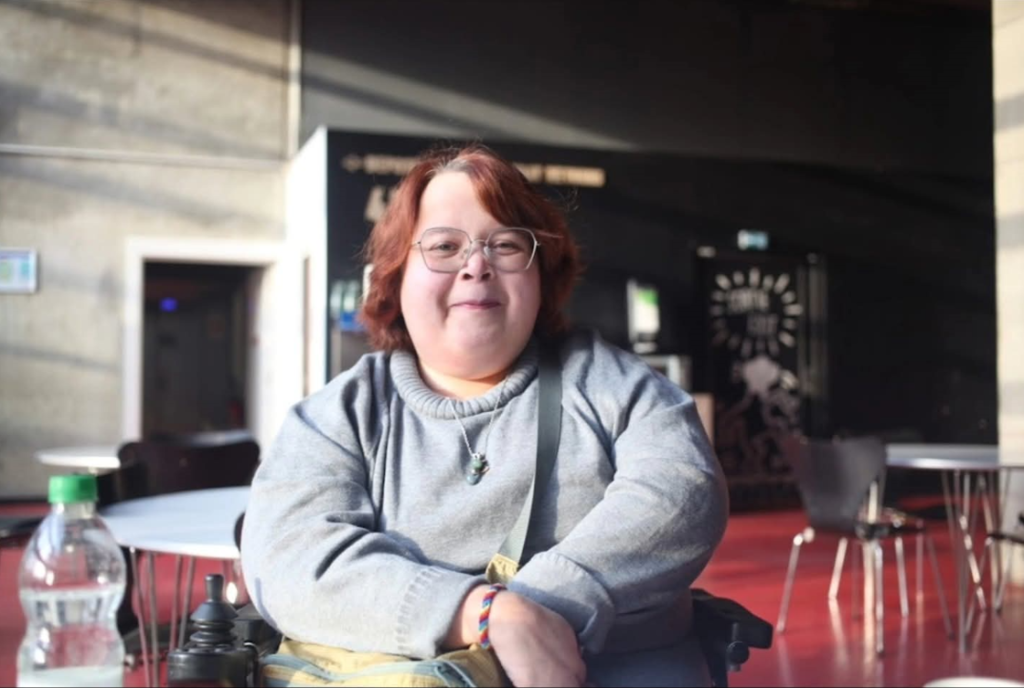
In September 2019, Ina Åkerberg and her mother Liiso Åkerberg from RBU Barnhjälpen Tanzania received a request to carry out a hike up Africa's fourth highest mountain; Mount Meru. Ina was born with a spina bifida and hydrocephalus and had several reasons to accept the project.
- What made me say yes to the hike was first and foremost to do something I have never done before, see things I have never seen and meet new people. The second reason was the opportunity to help raise money for the construction of the House of Hope in Haydom, Tanzania. To help the children there to have closer help after surgery and for the parents to have a place where they can learn more about their children's disabilities.
Since this was the first time a person in a wheelchair would try to climb Mount Meru, neither Ina nor the rest of the team knew how to do it. Many of the paths were steep and narrow and the surface could consist of uneven boulders. With a wheelchair, rails, crutches and after a lot of practice at home in Sweden, Ina managed to get to the top of Little Mount Meru. During the hike, Ina and the team developed techniques and methods to succeed, but above all there was a commitment and a determination that made it possible to reach the top. Today, Ina looks back on the hike as the toughest challenge she has done physically.
- This was a fantastic experience and challenge and I will carry it with me for the rest of my life! I knew it would probably be the toughest challenge I have done physically but the biggest thing I carry with me from this is the importance of communication and how good and patient I am at communicating, it was a wonderful discovery! Together as a team, we can all achieve any major challenges and dreams.
One of the people who grew up with spina bifida in Tanzania and who received support from ASBAHT is Rajabu. Rajabu lives outside Dar es Salaam with his siblings. Rajabu is a happy man in his 30s, but he has not always been as happy or measured as well as he does today. When Rajabu was 13 years old, he was hospitalized and in connection with his hospital visit, he came in contact with ASBAHT for the first time.
Rajabu's contact with ASBAHT allowed him to learn to deal with various problems and challenges that come with his disability. Above all, Rajabu learned to catheterize himself, which is crucial to being able to have a functioning life. Incontinence is one of the consequences of spina bifida and not being able to manage your bladder leads to a lack of hygienic environment for the person himself, which in turn leads to exclusion and isolation in society. People around are distancing themselves because of the smell of urine and it is difficult to get a job.

Rajabu outside his home in Dar es Salaam, Tanzania.
Just over 10 years ago, Rajabu began to have problems with large wounds on his legs. Rajabu has no sensation in the legs, which affects the healing partly because it takes longer before the wounds are discovered and partly due to poorer blood circulation. Bacteria developed and the wound began to reach the bone.
- I had already given up. My general health was very bad, I was so weak and I had no hope. ASBAHT were the ones who took me to the hospital to find ways to treat the wounds
The situation only got worse and Rajabu became weaker. During this time, ASBAHT was there to support Rajabu and took him to the hospital to try to find a way to treat the wounds on his legs. To survive, Rajabu had to amputate both of his legs. Rajabu felt resigned, but thanks to the support ASBAHT gave him, he regained his hope. Today, Rajabu himself is involved in ASBAHT to continue the fight to empower people with disabilities.
A major challenge for people with spina bifida and / or hydrocephalus in Tanzania is the negative attitudes and stigma they face. Chowa is one of those people who has experience with it. Five years ago, Chowa gave birth to her firstborn son, Fidelis, who was diagnosed with spina bifida and hydrocephalus. Fideli's father had difficulty accepting his son's disability, which led him to begin mentally abusing both his wife Chowa and their son. The situation forced Chowa to leave her husband and move in with her parents, where she still lives.

Chowa and her Fidelis, outside their home in Dar es Salaam, Tanzania.
Before Chowa gave birth to Fidelis, she suffered several miscarriages and doctors said she would no longer be able to have children. That Chowa then got Fidelis, felt like a miracle to her, but when they understood that he had spina bifida and hydrocephalus, she was told that Fidelis would not survive and that if he survived he would not be able to have a job or live a working life. Chowa was desperate. But when she came in contact with ASBAHT, everything changed.
- When I came in contact with ASBAHT and met other parents who have children with spina bifida and hydrocephalus who are well, I realized that there was hope for my son as well.
One of the challenges for Chowa has been to cover all the costs that have come with Fideli's hospital visits. Her contact with ASBAHT has made her no longer have to worry about it. When Chowa today faces new challenges with her son's disability, she always knows where to turn.
In Tanzania, more than 5,000 children are born with spina bifida and / or hydrocephalus every year and several of them can receive the medical care and support they need thanks to the work that ASBAHT together with RBU Barnhjälpen Tanzania does. The reasons are several; resources, knowledge and awareness as well as an enormous will and determination to change the situation of people with disabilities. By receiving the health care and support needed, people like Rajabu, Chowa and Fidelis can enjoy equal rights and opportunities for a functioning and dignified life.
Text and image: Sara Westfahl

Ina from RBU, walking with crutches in the mountain Mount Meru.