”Most people simply sweep their memories under the carpet.”
These are the words of Esmina Avdibegović, a professor of psychiatry at the University of Tuzla in Bosnia and Herzegovina. She has spent decades working with survivors of the 1990s war - people who have tried to move on without ever talking about their experiences. Professor Avdibegović emphasised the importance of group therapy - and of bringing together people who were on different sides of the conflict. When people come together in dialogue, she said, healing can begin.
In June, RSMH, the Swedish National Association for Social and Mental Health, travelled to Bosnia and Herzegovina to learn more about how war trauma affects people and communities. The trip was part of the international cooperation through MyRight and was carried out together with the partner organisation TK Fenix, which for over twenty years has worked to ensure that people with mental illness are seen, heard and respected.
For RSMH, the experience in Bosnia is crucial. When the war in Ukraine ends, thousands of people will need support to move on. Understanding how trauma takes hold - in the body, in the silence, in the community - is crucial to recovery.
During the trip, the RSMH met people who still carry the war within them. During a lecture on peer support, the conversation took an unexpected turn when one man exclaimed: ”Why should I even try? The bad people survive and the good people die.”
Instead, the lecture became a conversation. One by one, participants began to share their experiences of loneliness, oppression and guilt. Someone spoke of abuse, another of bullying. Slowly, the room transformed - from silence and mistrust to openness and understanding.
At the end of the meeting, people who had just sat silently smiled. It was a reminder that healing doesn't start with treatment, but with someone listening.
For RSMH, the trip proved that peer support is a universal method of recovery. Regardless of language, culture or war experience, the need is the same: to be taken seriously, to talk, and to feel that you are not alone.
”We are taking the lessons learnt from Bosnia into the future,” says RSMH, ”because one day, when Ukraine heals its wounds, it will need communities that dare to talk about what has hurt them.”
No one should be left behind when disaster strikes
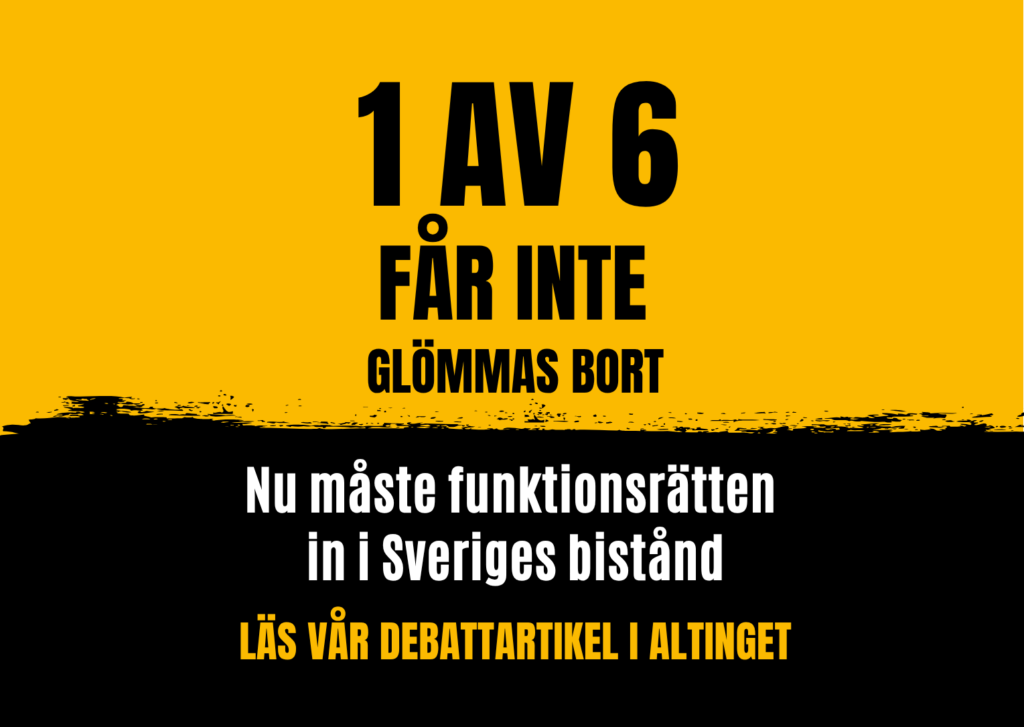
When crises and conflicts arise, people with disabilities are often left without protection, information and support. This is not an exception - it is a systematic exclusion that makes already vulnerable people even more vulnerable.
MyRight is working to change this. Together with our partner organisations, we ensure that people with disabilities are included in crisis preparedness, humanitarian response and reconstruction. Everyone has the right to safety and survival - even in disasters.