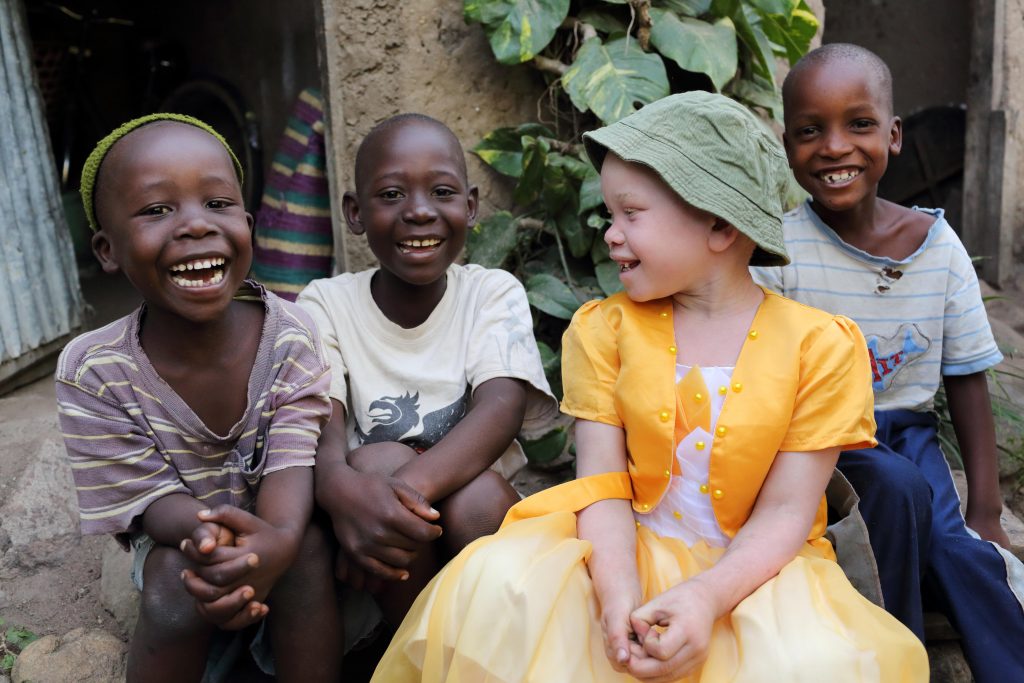
In addition to stigma, harassment and attacks, people with albinism in Tanzania often suffer from skin cancer. De flesta blir inte äldre än 40 år, men organisationen Tanzania Albinism Society arbetar för att förbättra cancervården genom påverkansarbete och utbildning.
Tanzania is said to be one of the countries with the highest population of people with albinism in the world. While the number varies, it is estimated that in North America and Europe, 1 in 17,000 to 20,000 people have some form of albinism. The condition is much more common in sub-Saharan Africa, with an estimated 1 in 1,400 people affected in Tanzania.
People with albinism often die of skin cancer because they are not aware of how to protect themselves. Although skin cancer can be prevented with the right measures - such as access to regular health check-ups, sunscreen, sunglasses and sunscreen - it is often inaccessible or inaccessible to many people with albinism.
Awareness of the importance of sun protection among parents in Tanzania is also low, especially among parents without albinism who have children with albinism. The Ocean Road Cancer Institute in Tanzania reports that 78 percent of patients come to the institute when they are already in the later stages of the disease and thus have a low chance of being cured. The main reasons for late diagnosis and treatment are distance to clinics, awareness, poverty and misleading information from traditional doctors. Other causes are an insufficient number of cancer specialists and trained experts, insufficient facilities and equipment and a lack of information.
Health challenges for people with albinism
Skin cancer is one of the top ten cancers that cause death and morbidity and it often affects people with albinism. Albinism is a genetic condition characterized by a deficiency or little melanin. The lack of melanin in hair, skin and eyes increases their vulnerability to exposure to the sun, which can lead to skin cancer and severe visual impairment. The majority die of skin cancer between the ages of 30 and 40, about 80% die at home without reaching the hospitals for treatment.
Skin cancer is preventable and controllable when and if people with albinism enjoy their right to health, including awareness, access to sunscreen, sunglasses and regular health check-ups for early detection and intervention.
People with albinism in Tanzania, especially those living in rural areas and in the less extended regions, continue to experience sunburn, high morbidity and high mortality. In combination with extreme poverty, people with albinism in these areas have gained control in the late stages of cancer. According to cancer reports from the Ocean Road Cancer Institute, 78% of the cancer patients reached the hospital when the cancer was already in critical stages.
Successful advocacy work
Many people with albinism believe that they are alone with their disability and belonging to others is important for self-esteem. Tanzania Albinism Society (TAS) has since its inception in 1978 worked to strengthen, protect and support people with albinism. They help with practical things, such as informing about how to protect themselves from the sun, but also that you have the right to education, work and family like everyone else.
Since the collaboration with the Swedish Association of the Visually Impaired began just over 20 years ago, TAS has become increasingly established as an organization and in recent years has received a lot of attention for its work. In 2014, Tanzania's Foundation for Civil Society also named TAS Tanzania's main advocacy organization, as in 2013 they influenced the government to decide that medicine and sunscreen should be free for people with albinism. It has also been decided that children with albinism should be allowed to wear a comprehensive school uniform, which has previously been prohibited.
Through the influence of TAS, there are today more cancer doctors and treatment options. But a challenge for many Tanzanians is to be able to get care at all. There are only a few treating skin cancer clinics in the country, as well as a couple with preventive care.
In the future, TAS hopes to expand its work with mobile skin cancer clinics that travel to the villages around Tanzania.
Read more about how MyRight works to strengthen disability organizations around the world.
Albinism is the genetic condition characterized by a lack of small production and distribution of melanin in the body, which affects the eyes and the natural colors of skin and hair.
Melanin is a natural skin pigment. Hair, skin and eye color in humans and animals mostly depend on the type and amount of melanin they have.